Cutting Corners Design is now called Bags and Seams Design!

Author
Sarah is a successful pattern designer for bags, the founder of Bags and Seams Design, and a BERNINA instructor. With great passion, she helps beginners discover their enthusiasm for sewing bags. In her high-quality courses, she teaches the necessary skills step by step and ensures motivating sewing experiences with tangible results.
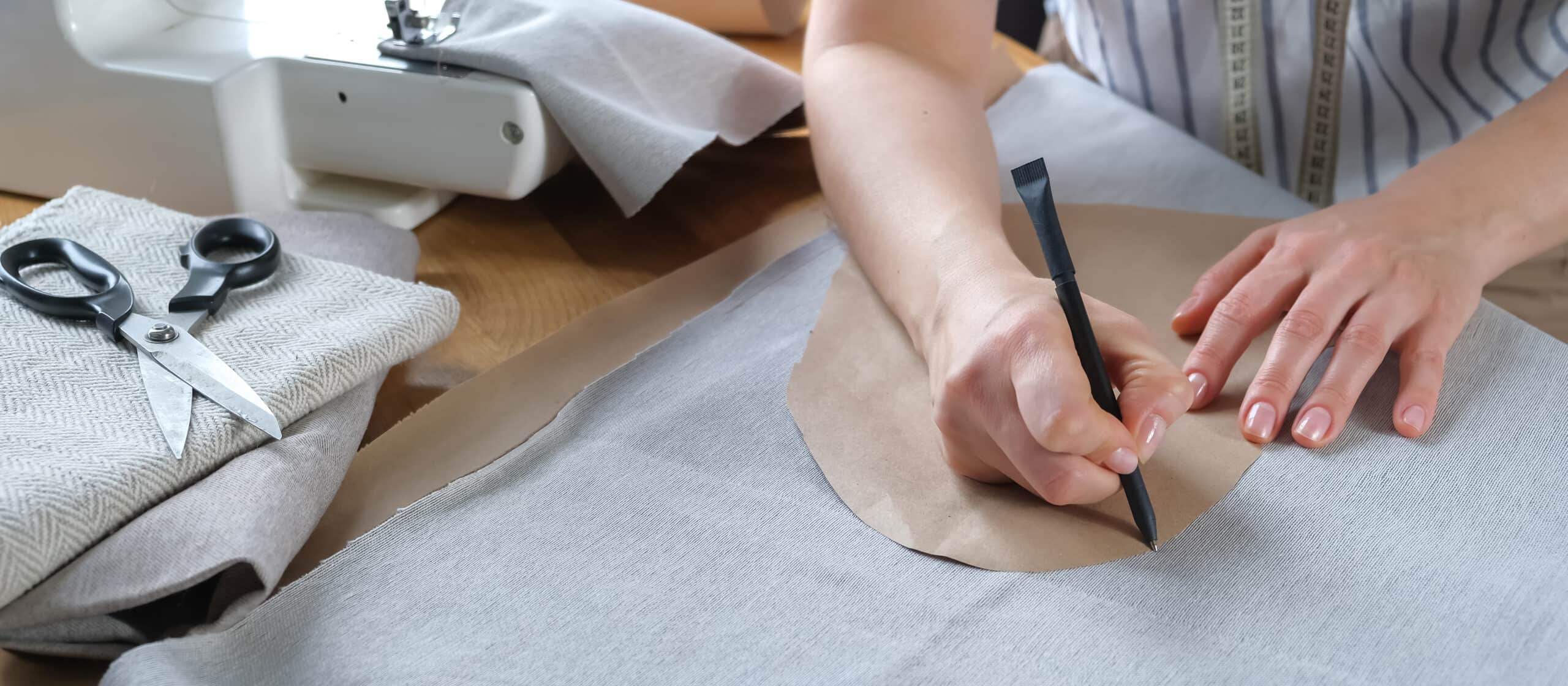
Bags are ideal beginner projects for learning to sew. You’ll practice straight seams, precise cutting, seam allowances, inserting a lining, and later on, working with zippers, interfacing, and webbing.
You don’t need any expensive special equipment to make your first bag. A standard household sewing machine, cotton fabric or canvas, polyester sewing thread, a suitable sewing machine needle, and a few basic sewing tools are all you need.
It’s best to start with a simple cloth bag or shopping bag. Then you can gradually work your way up to lined bags, zippered bags, crossbody bags, and more challenging bag designs.
Imagine you’re sitting in front of a sewing machine for the first time. In front of you are two pieces of fabric that have been cut to size, a spool of thread, and a set of instructions that, at first glance, seem more complicated than you expected.
You lower the presser foot, gently press the foot pedal, and the machine starts moving. The first stitch isn’t quite straight, but that’s okay!
You sew the side seams, attach the handles, and turn your project inside out. Suddenly, what lies before you is no longer a collection of fabric pieces, but a real bag. Maybe it’s not perfectly symmetrical. Maybe one seam is a little crooked. But you sewed it yourself.
It is precisely this sense of quick accomplishment that makes bags the perfect projects for beginners in sewing.
When sewing bags, you can immediately see how individual materials come together to form a functional item. You don’t just learn how to use a sewing machine; you also come to understand how fabric, thread, needles, interfacing, and patterns all work together.
With every new bag you make, your knowledge grows. After the simple fabric bag comes a lined shopping bag. Next, you’ll sew in your first zipper. Later, you’ll add interior compartments and adjustable straps. And it’s so much fun!
Bags are particularly well-suited for beginners because they usually have simple shapes. Many simple designs are sewn from rectangles or square pieces of fabric and don’t require complicated pattern pieces.
When sewing clothes, you have to take into account body measurements, sizes, freedom of movement, darts, curves, and often stretchy fabrics as well. A bag is much more forgiving of minor deviations.
When sewing bags, you’ll learn, among other things:
Another advantage: The finished project is practical. Even a simple bag can be used right away as a shopping bag, project bag, gift bag, or storage bag.
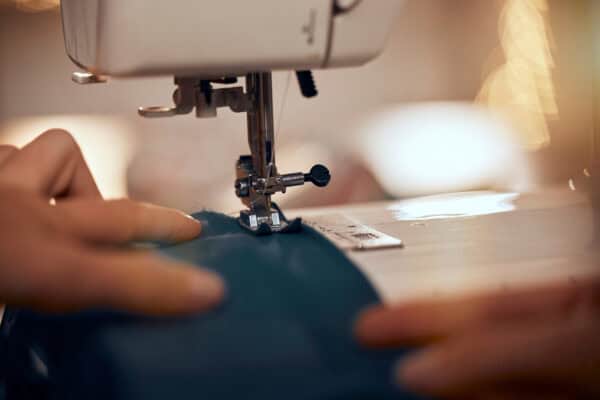
The best first bag isn’t the most impressive one. It’s the bag that lets you focus on just a few basic steps.
The following are particularly well-suited:
For your first project, you should avoid difficult curves, multiple interior compartments, thick combinations of materials, and elaborate metal hardware.
A simple cloth bag is a great place to start. You’ll learn how to cut out the pieces, sew the sides together, neaten or fold over the top edge, and attach the handles.
Once you feel comfortable with that, you can sew a bag with a lining. Next, you’ll make a small zippered makeup bag.
You can organize your bag projects by difficulty level:
Level 1: Unlined Cloth Bag
You’ll be practicing seams, seam allowances, and handles.
Step 2: Lined Tote Bag
You’ll learn how to join the outer and inner fabrics and close a turning opening.
Level 3: Zipper-Closure Cosmetic Pouch
You’ll use a zipper foot and learn how to construct a zipper-closure pouch.
Step 4: Shoulder Bag or Crossbody Bag
You’ll be working with interfacing, webbing, D-rings, carabiners, and adjustable straps.
Step 5: Backpack or Weekender
You combine multiple compartments, sturdy reinforcements, zippers, and thicker layers of fabric.
If you’d like help sewing bags, check out my fantastic self-study course, “The Ultimate Guide to Sewing Bags,” which includes an optional step-by-step guide and ready-to-use patterns organized by difficulty level—or join my Bag Sewing Masterclass for guided instruction and immediate learning success!
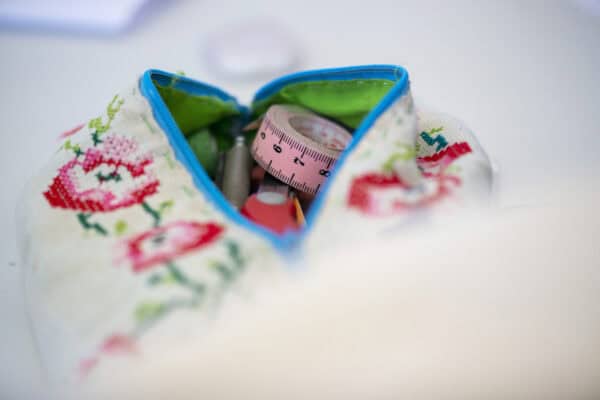
You don’t need a fully equipped professional workshop to get started. A small, well-chosen set of basic tools is all you need.
The following items are helpful for your first bag projects:
Don’t rush out and buy every specialty tool that’s recommended to you. Start with a specific project, and only add to your toolkit when you actually need it.
For a simple shopping bag, for example, you don’t need metal snap hooks, a Teflon base, or particularly stiff bag inserts.
For beginners, fabrics that are sturdy, don’t shift much when cutting, and are easy to iron are a good choice.
Cotton WovenFabric is easy to work with and is well-suited for small bags, linings, and simple fabric pouches. Thin cotton often requires an additional interfacing.
Canvas
Canvas is sturdier than regular woven cotton fabric and is ideal for shopping bags, tote bags, and durable everyday bags.
Sturdy decorative fabric
Decorative fabric often has a bit more body and can therefore be used for simple bag designs.
Denim
Jeans are suitable for sturdy bags and upcycling projects. However, a stronger needle may be required when working with multiple layers of fabric.
Cord
Cord gives bags a soft and stylish texture. When cutting it, be sure to pay attention to the direction of the nap.
Materials that are very stretchy, slippery, or extremely thick are less suitable for this first project. Jersey, thin viscose, velvet, stiff leather, or multiple layers of faux leather can make getting started unnecessarily difficult.
A beautiful fabric alone doesn’t guarantee a sturdy bag.
A thin cotton fabric can be turned into a bag that holds its shape with the right iron-on interfacing. A very thick outer fabric, on the other hand, may require very little additional reinforcement.
Interlining and reinforcements give a bag its shape, structure, and stability. Without reinforcement, bags made of thin fabrics often appear flimsy or collapse.
The type of lining you need depends on the type of bag and the outer fabric used.
A small zippered pouch usually requires only light to moderate reinforcement. A shopping bag often needs more stability, especially at the bottom and where the handles attach. For backpacks or weekend bags, sturdier linings, foam batting, or additional bottom inserts are often used.
Keep the following basic rule in mind:
The thinner the fabric and the larger the bag, the more important it is to use appropriate reinforcement.
Always test the combination on a scrap of fabric. Iron a small piece of the interfacing onto the fabric and let it cool completely. Then you can determine whether the result is soft, retains its shape, or is perhaps too stiff.
The sewing machine needle must be suitable for the material and the thickness of the fabric layers.
The following recommendations are provided for guidance:
When sewing synthetic leather, you shouldn’t automatically use a leather needle. A leather needle cuts into the material. Depending on the type of synthetic leather, a Microtex or denim needle may be more suitable.
Change the needle regularly. A dull or damaged needle can cause missed stitches, broken threads, damage to the fabric, and an uneven stitch pattern.
If your sewing machine suddenly starts making a clacking noise, skips stitches, or the thread breaks repeatedly, you should first insert a new, compatible needle.
For most bag projects, high-quality, all-purpose polyester thread is a good choice. It is tear-resistant, easy to care for, and suitable for many types of fabric.
Since bags are subject to particular wear and tear at the handles, side seams, and bottom, the thread should not only match the color but also be durable enough to withstand the strain.
Standard sewing thread is sufficient for regular seams. For visible topstitching, you can use thicker thread later on. In this case, the thread thickness, needle size, stitch length, and thread tension must be adjusted to work together.
A common beginner’s mistake is using thick yarn with a needle that’s too small. The thread can’t pass through the eye of the needle smoothly, so it starts to fray and breaks.
For your first bags, a neat seam is more important than eye-catching decorative thread.
The term “tote bag” refers to a bag—usually open-top—with two parallel handles. The English verb “to tote” means to carry or transport something. The term “tote bag” has been in use since the early 20th century.
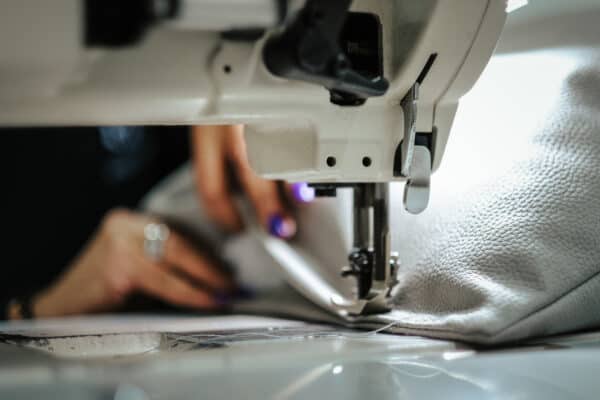
For simple bags, a standard household sewing machine is usually sufficient.
The most important things are:
* a reliable straight stitch,
* adjustable stitch length,
* a reverse function for locking the stitch,
* a zipper foot,
* easily adjustable thread tension,
* a sewing speed that is as controllable as possible.
A needle stop at the bottom, a top feed foot, an edge guide foot, or adjustable presser foot pressure are helpful but not essential.
Even a high-performance sewing machine has its limits. Multiple layers of faux leather, webbing, sturdy interfacing, and a thick seam allowance can be too much for a standard household sewing machine to handle.
That’s why you should sew a test piece using all the layers you’ll be using in the actual project beforehand. This way, you’ll be able to tell early on whether the needle, thread, stitch length, and machine are a good match.
The seam allowance is the distance between the edge of the fabric and the seam. The pattern usually specifies whether it is already included.
The two beautiful sides of the fabric are placed directly against each other. After sewing them together and turning the fabric inside out, the beautiful sides will be on the outside.
A turning opening is an unsewn section of the seam. The bag is turned right side out through this opening. The opening is then sewn shut.
When securing a seam, sew a few stitches back and forth at the beginning and end of the seam. This prevents the seam from coming undone easily.
When topstitching, you sew a visible seam close to a fabric edge or seam. It keeps the layers of fabric flat and ensures a neat appearance.
The lining is the inner fabric of the bag. It hides the seam allowances and gives the bag a neat interior.
Topstitching refers to visible stitching that is used for functional or decorative purposes. On bags, it often makes the edges look more professional.
1. Choose a simple and easy-to-follow pattern.
2. Start with cotton fabric or medium-weight canvas.
3. Read the entire instructions before cutting out the pieces.
4. Check whether the seam allowance is already included in the pattern.
5. Cut out all pieces as precisely as possible.
6. Mark the handle positions, turning openings, and attachment points.
7. Use a new needle that matches the fabric.
8. Sew a test piece using all layers of material.
9. Iron after each important step.
10. Don’t expect perfection with your first bag—instead, be proud of your learning journey!
Sewing bags is a particularly motivating way to get started in the world of sewing. You’ll begin by working with simple shapes, learn basic sewing techniques, and quickly end up with a finished, useful project.
To get started, you don’t need an industrial sewing machine or expensive specialty materials. A simple bag project, a fabric that’s easy to work with, matching thread, a suitable needle, and a little patience are all you need.
Start with a simple cloth bag. For your next project, add a lining. Then sew in your first zipper. With each bag, you can learn a new technique.
Your first bag doesn’t have to be perfect. It just has to show you that you can get started.
Yes. A simple cloth bag or shopping bag is a great first sewing project because it consists mostly of straight seams and straightforward fabric pieces. Beginners learn how to cut out the pieces, add seam allowances, finish seams, and attach handles. Unlike clothing, there’s no need for complicated fitting or size adjustments.
For absolute beginners, a rectangular fabric bag without a lining or zipper is the easiest to make. It usually consists of two pieces of fabric and two handles. A lined shopping bag is a good next step. After that, you can sew a small zippered pouch.
Medium-weight cotton fabric, canvas, or a sturdy decorative fabric work particularly well. These fabrics can be cut to exact measurements, don’t shift much, and can be sewn on a standard home sewing machine. Thin cotton should be reinforced with iron-on interfacing for added stability.
Yes. A standard home sewing machine is sufficient for making fabric bags, shopping bags, makeup bags, and many simple shoulder bags. The key is to use the right needle, high-quality thread, and a combination of materials that isn’t too thick. Multiple layers of sturdy faux leather, webbing, and heavy-duty interfacing can be too much for a household sewing machine to handle.
You’ll need a household sewing machine, cotton fabric or canvas, all-purpose polyester thread, a universal needle (size 80 or 90), fabric scissors, a marking tool, clips or pins, and an iron. For a bag that holds its shape better, add a light- to medium-weight iron-on interfacing. A zipper is not required for this first project.