Cutting Corners Design is now called Bags and Seams Design!
Author
Sarah is a successful pattern designer for bags, the founder of Bags and Seams Design, and a BERNINA instructor. With great passion, she helps beginners discover their enthusiasm for sewing bags. In her high-quality courses, she teaches the necessary skills step by step and ensures motivating sewing experiences with tangible results.
Test sewing is a great way to refine your sewing techniques on different patterns, as well as to work with a team of like-minded people to create fantastic variations of a pattern and support one another.
I myself have participated in test sewing projects for many years and have always really enjoyed it. As a pattern designer, I now regularly organize test sewing projects myself and have the pleasure of leading them with wonderful people from the sewing community. I still enjoy the interaction and sense of community that you rarely find elsewhere when sewing.
But what is a test sew? When test sewing a bag pattern, you test a preliminary set of instructions before it’s officially published. You sew the project as closely as possible to the instructions, check the pattern pieces and steps, and provide specific feedback. You can include nice photos—but the focus is on ensuring the pattern works reliably later on and that the instructions are clear and easy to follow for sewers of all skill levels.
In a test-sewing project, a selected group of testers receives a sewing pattern that has not yet been published. The participants complete the project under realistic conditions and report any errors, inconsistencies, or parts that are difficult to understand.
The point isn’t to sew a pretty bag as quickly as possible. What matters is whether other customers will be able to follow the instructions later on.
Typical questions asked during the test include:
If you find a mistake, that’s not a problem—it’s an important part of your job. The purpose of test sewing is to identify any flaws before customers pay for the pattern.
These terms aren’t used the same way everywhere. That’s why you should always read the specific job posting.
These two roles can overlap. Some test sewers also provide photos for publication. Some design sewers report errors while they’re working on a project, which is very helpful for the designer.
Even if two test sewers use the same pattern, all the bags they make during the test sewing phase will look very different. And that's half the fun! The final result is greatly influenced by the choice of fabric, interfacing, and reinforcement. That's exactly why a test team using different materials is particularly helpful: it shows whether the instructions work only with a specific combination and can be followed effectively.
The exact process varies depending on the provider. For me, test sewing consists of several phases.
The call to action will appear on Instagram, Facebook, and in my newsletter.
In it, you’ll find:
Please read all the terms and conditions before applying. If the time frame doesn’t work for you or if you lack important basic knowledge, this project is probably not the right fit for you.
I don’t select my testing team based on the number of followers. In my tutorials, I place a high priority on ensuring that the sewing steps are easy for all sewers to follow. That’s why I always look for a mix of different skill levels. Even sewers who haven’t sewn any bags yet but would like to give it a try.
This gives me a clear view of all the details and helps me create truly high-quality patterns.
I also look for variety in sewing styles and the text you write. If the text or your profile appeals to me—for example, because you’re very motivated or have an interesting sewing style—then that’s a perfect fit.
When I accept your application, I usually share a link to the test group, where you’ll find all the additional information you need for sewing. There you’ll find the pattern, the instructions, detailed information about the process, and a photo release form that I need from you so that I can publish your photos afterward.
You’ll also have the chance to introduce yourself and chat with other sewers.
It’s important to me that you sew the pattern exactly as described the first time. This isn’t always easy for experienced sewers who are inspired by the bag. However, it’s important so that I can use your feedback on the pattern. Also, I can only feature photos that match the pattern’s design, since otherwise I run the risk of confusing customers later on.
Once you’ve finished sewing the bag and submitted your feedback, I’d also love to see some photos that I can use for promotional purposes. Taking photos of bags isn’t always easy. But with a plain background and some paper to prop up the bag and fill it out, it’s no problem at all. Just try out different angles.
However, do not publish anything before the agreed-upon date. During the testing phase, new models are still confidential.
Depending on the number of changes made to the pattern, I’ll announce the release date in the group. This may be subject to change at times. For the release, I’ll create a lookbook featuring all the designs and provide you with a sample text. You can then share your bag with the community at your own convenience, and if you’d like, I’d appreciate it if you could help promote the pattern. As a tester, you’ll of course receive the finished pattern for free in the group.
Yes, as long as the sewing skill level is appropriate for the project or if beginners are specifically sought after. Especially for my patterns from Bags and Seams Design, I specifically look for inexperienced sewers for every test sew.
A beginner often notices exactly the points that experienced seamstresses automatically fill in. These include missing definitions of terms, ambiguous descriptions of fabric sides, or unclear images.
This is a valid question that comes up time and again in the sewing community. Personally, I have to say that I’ve always really enjoyed the laid-back atmosphere in test-sewing groups. If I were to pay testers, I could only afford a maximum of 2–3 testers per pattern, and as a small business, the time required to handle the contractual paperwork would be almost impossible for me to manage. That would greatly limit both the enjoyment and the quality of the process. This is also one reason why some designers don’t have their patterns tested at all.
That’s why I’m happy to have any seamstress or tailor who enjoys participating in my test-sewing project and receives the pattern for free as compensation. However, I’m also aware of the time commitment and, of course, the material costs involved in sewing each bag and taking good photos. So I can understand if it’s not worth it for some sewers.
A well-organized sewing workshop gives you insight into the process of creating a pattern. You can learn new techniques, work with greater precision, and improve your own feedback.
You can also:
At the same time, you should realistically assess the amount of work involved. Test versions, revisions, and photo requirements can take significantly more time than sewing a finished pattern.
When applying, it’s best to honestly describe your experience and explain why you’d like to be part of the project. What particularly appealed to you, and how do you envision the project? A social media profile shows what you’ve sewn so far or what style you like to sew. This helps the designer get a good sense of who you are.
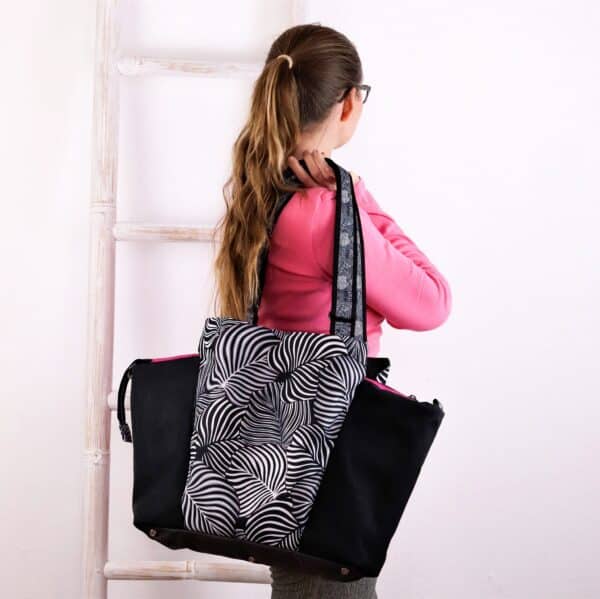
When test-sewing bag patterns, you help develop reliable instructions. You don’t need a huge following or years of experience to do this. What’s more important is having enough time, working carefully, providing clear feedback, and having a realistic view of your abilities.
Before applying, read all the requirements and see if the timeframe and the bag are a good fit for you. Then write honestly about why you’re interested in the bag and how many bags you’ve sewn so far. Unfortunately, spots for test sewing are always limited, even though I’d love to accept everyone. However, every test sewing project offers a new opportunity—I look forward to your application!