Cutting Corners Design is now called Bags and Seams Design!

Author
Sarah is a successful pattern designer for bags, the founder of Bags and Seams Design, and a BERNINA instructor. With great passion, she helps beginners discover their enthusiasm for sewing bags. In her high-quality courses, she teaches the necessary skills step by step and ensures motivating sewing experiences with tangible results.
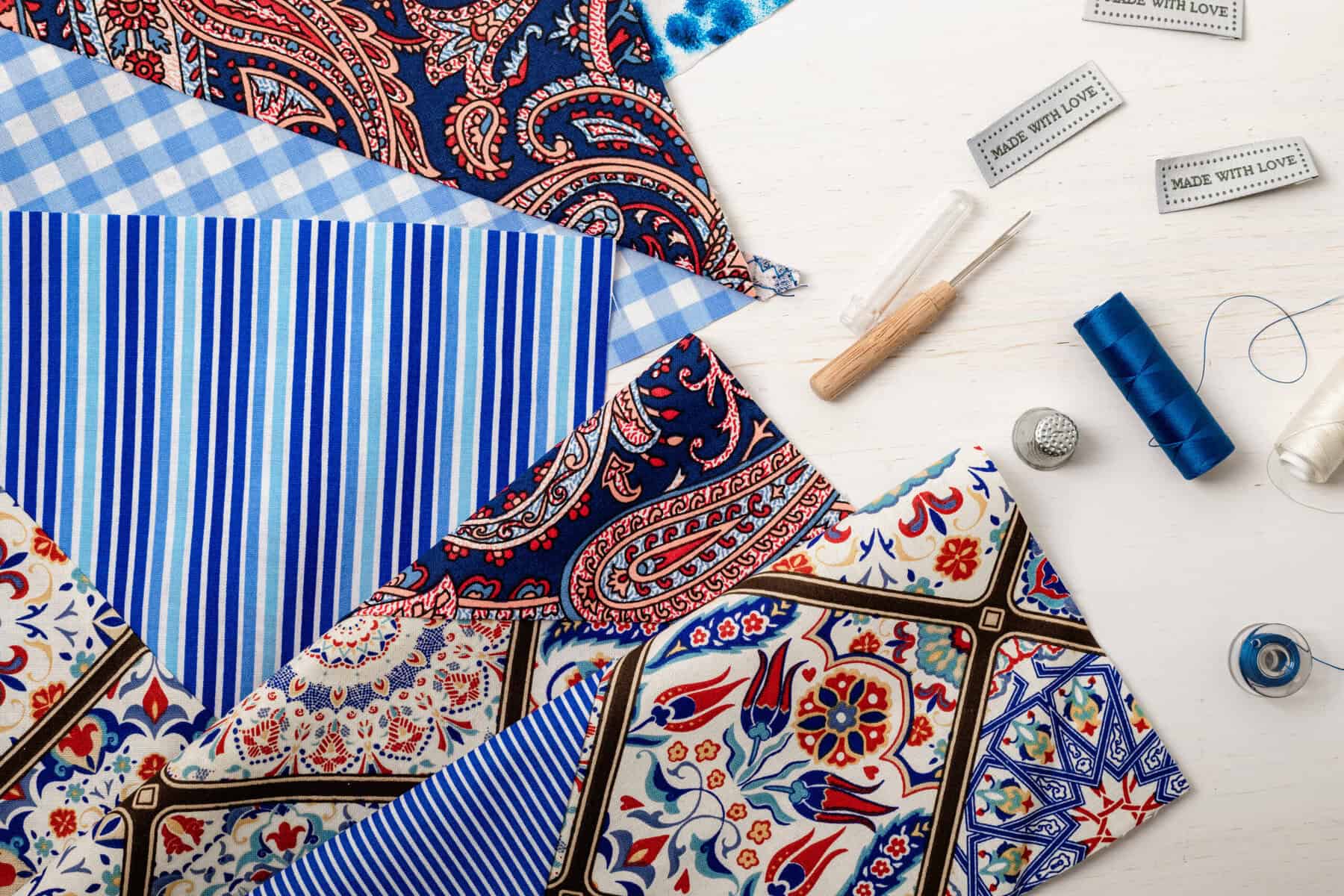
People who are just starting to sew often wonder which fabrics are best for making clothes when they’re beginning. Sturdy, non-stretch woven fabrics such as cotton poplin, batiste, muslin, and linen are particularly well-suited for beginners because they hardly slip and are easy to cut.
Jersey and sweatshirt fabric are types of knitted fabrics; they’re stretchy and therefore a bit more challenging to work with, but even beginners can handle them well using a jersey or stretch needle and an elastic stitch. Viscose drapes beautifully, but because it flows so easily, it’s a bit slippery and is better suited for your second or third project.
As a beginner, you should avoid very thin, smooth, or highly stretchy fabrics such as satin, chiffon, silk, or Lycra. Cotton fabrics and muslin are particularly well-suited for skirts, dresses, and tops; for pants, slightly sturdier woven fabrics or sweatshirt fabric work best; and for children’s clothing, cotton, muslin, and soft jersey with Oeko-Tex certification are top choices.
Not every pretty fabric is equally well-suited for your first sewing project. The right fabrics for clothing when you’re just starting out share a few common characteristics: They’re medium-weight, don’t slip under the presser foot right away, fray very little, and iron well, so seam allowances stay nice and flat. That’s exactly why the same fabrics show up in almost every recommendation for choosing fabric for clothing: cotton, muslin, and linen.
Another plus: Many sewing patterns already include a fabric recommendation. You should definitely take these recommendations seriously, as they tell you whether a pattern was designed for woven fabric or for stretchy knit fabric. This will save you frustration, because if you use the wrong type of fabric, the garment simply won’t drape or fit the way you intended.
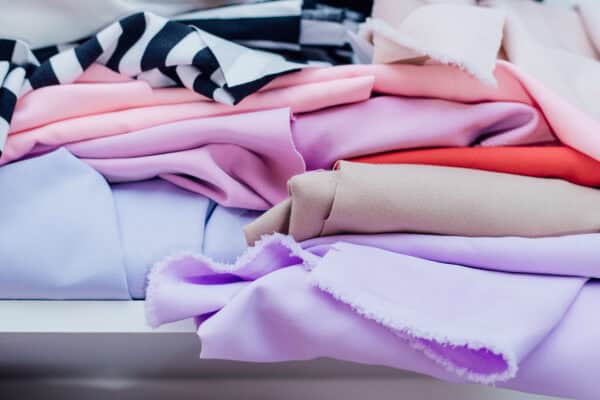
When it comes to simple fabrics for beginners, there’s hardly any better choice than cotton. Cotton fabric for clothing is rightly considered an all-around favorite among beginners: The fibers absorb moisture well, feel pleasantly soft against the skin, and are easy to care for, making garments sewn from it comfortable to wear in every way. Especially handy for beginners: Hem edges hold their shape reliably after ironing, saving you the trouble of using pins and basting stitches.
Within the cotton family, there are several varieties that are particularly well-suited for clothing projects, most notably cotton poplin and batiste. Poplin is slightly sturdier and therefore easier to work with, but it isn’t as soft as other fabrics. Before you get started, you should pre-wash your cotton fabric, as it tends to shrink a bit during the first wash.
One fabric choice for clothing that’s becoming increasingly popular among beginner seamstresses is muslin. Sewing with muslin as a beginner almost feels like a little reward, because this lightweight, multi-layered cotton fabric is a pleasure to work with and still drapes beautifully—soft and airy. It’s precisely this combination of softness and a loose drape that makes it a favorite for baby and children’s clothing, as well as for decorative sewing projects. So if you’re planning to make your first little dress for your little one or a breezy summer top, muslin is the perfect choice.
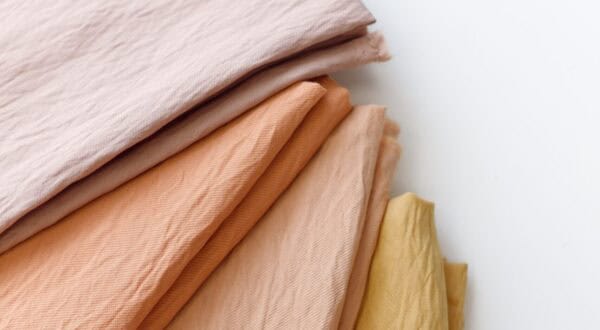
Sewing with linen may sound like a challenge for beginners at first, but linen is actually one of the natural plant-based fibers that’s relatively easy to work with. The characteristic, slightly textured feel of this natural fiber makes the fabric pleasant to handle and sew. The only downside: pure linen tends to wrinkle, though for some summer garments, that’s actually part of its casual charm.
Viscose is at the top of many beginner sewers’ wish lists because it feels so wonderfully flowing and supple. However, I wouldn’t necessarily recommend it for your very first project: Viscose tends to slip a bit under the scissors and the sewing machine, so it’s best to use fabric weights instead of pins when cutting and a finer needle when sewing. Once you’ve successfully completed your first cotton project, viscose is a wonderful next step toward creating flowing, elegant garments.
Jersey is one of the topics that causes the most uncertainty, and quite rightly so: Jersey is a type of knit fabric and is stretchy, which comes with its own set of rules when it comes to sewing. For complete beginners, it’s therefore considered a higher level of difficulty because it requires special needles and adjusted stitch settings. With the right equipment, however, jersey is a fabric that’s actually quite easy to work with. It’s important to use a jersey needle with a rounded tip, as well as an elastic stitch like a zigzag or a special stretch stitch, so that the seam can stretch along with the fabric later on without tearing.
My tip for getting started: Choose a patterned, medium-weight single jersey. Small irregularities are less noticeable in a pattern anyway, and a medium-weight jersey is much less likely to slip under the needle than paper-thin varieties.
Sweatshirt fabric is also a knitted fabric, but it’s significantly thicker and therefore more durable than classic jersey. While it stretches with your body, it remains sturdy and tear-resistant, and at the same time feels soft and comfortable against the skin. This makes it perfect for cozy sweatshirts, hoodies, or your first pair of homemade sweatpants.
Cotton is one of the oldest textile fibers known to humankind and was already being spun and woven in India more than 5,000 years ago, long before sewing machines were even conceivable.
To help you better understand the different fabric names, it’s worth taking a look at the basic distinction between woven and knitted fabrics. For beginners, “woven fabrics” refers to all fabrics produced on a loom from two intersecting sets of threads, such as cotton poplin, linen, or canvas. These fabrics hardly stretch at all, so they’re less likely to shift, which is exactly why they’re so popular with anyone just starting out in garment sewing. Knit fabrics, on the other hand—such as jersey or sweatshirt fabric—are made from interlocking loops of yarn and are naturally elastic, which makes cutting and sewing them a bit more challenging.
Here’s a practical tip for woven fabrics: The raw edges tend to fray, so it’s best to neaten them right away with an overlock stitch or a zigzag stitch before the seam frays and holes form.
My tip for getting started: Choose a patterned, medium-weight single jersey. Small irregularities are less noticeable in a pattern anyway, and a medium-weight jersey is much less likely to slip under the needle than paper-thin varieties.
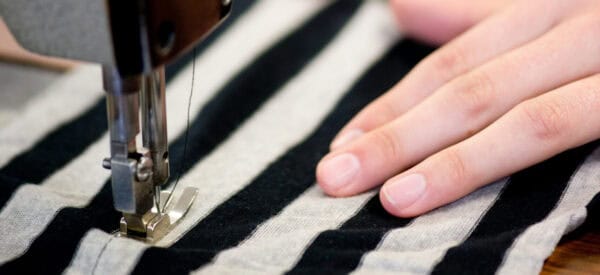
Depending on exactly what you want to sew, different materials are particularly well-suited:
Fabrics for Beginners Sewing Skirts: Cotton poplin, muslin, or lightweight linen are perfect for making a loose-fitting skirt and are forgiving when you’re first learning to sew.
Fabrics for Beginners Sewing Dresses: A lightweight cotton voile or muslin is ideal for a breezy summer dress; for a dress with a bit more structure, cotton poplin is also a good choice.
Fabrics for Beginners Sewing Pants: A sturdy woven fabric like canvas or a medium-weight cotton fabric is suitable for classic pants, while sweatshirt fabric or a sturdy jersey is perfect for a comfortable first pair of sweatpants.
Fabrics for Sewing Tops (Beginners): Cotton poplin or batiste are good choices for blouses and tops; for a comfortable T-shirt, single jersey is your best bet.
Fabrics for Children’s Clothing (Beginners): Cotton, muslin, and soft, breathable jersey are the best choices here—ideally with Oeko-Tex certification—to ensure that children’s sensitive skin is well protected.
Just as important as the right recommendations is knowing which fabrics can make getting started unnecessarily difficult. Very smooth, slippery materials like satin, chiffon, or real silk tend to slip under the presser foot and literally slide away when you’re cutting them. Even paper-thin, sheer fabrics are very unforgiving of imperfections and require additional techniques such as lining or interfacing. Highly elastic fabrics with a high spandex content—such as Lycra for athletic wear—are also best left for later, as they require special accessories and a keen sense of touch when sewing.
Choosing the right needle is just as important as choosing the right fabric, because the wrong needle can ruin even the best fabric.
For cotton and other woven fabrics, a size 80 universal needle is usually more than sufficient.
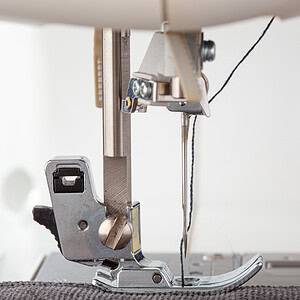
On the other hand, as soon as you have jersey or other knitted fabric on your sewing table, you’ll need a jersey needle: Its round, slightly blunt tip simply pushes the fine knit threads aside when you pierce the fabric, rather than piercing through them and damaging them.
For highly stretchy fabrics containing spandex—such as highly elastic jersey or Lycra—it’s best to use a stretch needle, which has a special groove that prevents skipped stitches.
As a general rule of thumb: The finer the fabric, the smaller the needle size; for most jersey projects, a needle size between 70 and 90 has proven to work well.
By the way, you can also tell the needle size by the color of the marking on the barrel: Turquoise stands for size 70, pink for 75, orange for 80, and blue for 90—which is handy if you've misplaced the packaging.
In the end, it’s not the most expensive material that matters—it’s the fabric that best suits your project and your skill level that determines whether sewing will be a joy or a frustration. Cotton, muslin, and linen will reliably guide you through your first steps, while jersey, sweatshirt fabric, and viscose will broaden your sewing horizons once you feel more confident. And let’s be honest: even if everything doesn’t fit perfectly on your first try, an affordable cotton fabric is forgiving, while you learn a lot about yourself, your machine, and your new hobby at the same time.
Cotton fabric is considered the easiest fabric for beginners because it’s sturdy, irons well, and is quite forgiving of sewing mistakes. However, because it lacks stretch, you’ll need to make your adjustments very precisely.
Jersey is stretchy and therefore a bit more forgiving than woven fabric when it comes to achieving a precise fit. However, with a jersey needle, an elastic stitch, and a medium-weight, patterned jersey, it’s a great way to get started.
Simple skirts, loose-fitting dresses, and easy-to-make T-shirts made of jersey or cotton tops are good choices, since these projects require few pattern pieces and no complicated fit details.
For your very first sewing project, I recommend a medium-weight cotton fabric, such as poplin, because it’s sturdy to work with and still comes in many beautiful patterns.
Heavyweight woven fabrics such as cotton, linen, or canvas are significantly less slippery than smooth, flowing fabrics such as satin, viscose, or silk.
For regular jersey fabric, use a jersey needle with a rounded ball point; for highly stretchy fabrics containing spandex, it’s best to use a stretch needle.